What We DoTech • Transformation
Improving enterprise performance using ERP for change management, risk analysis and project delivery leadership for SDLC or PLM.
Portfolio governance with ERP integration, SAFe agile delivery, and data analytics can provide business stakeholders with KPI business intelligence (BI) reports for software development lifecycle or product lifecycle management procedures.
Highlights Of:How enterprise resource planning (ERP) can improve operational efficiency
How enterprise resource planning (ERP) can improve operational efficiency
Business Analysis
- Identify Value Streams → Map to ERP functional modules (Finance, HR, Supply Chain, Manufacturing).
- Fund Operational Value Streams → Connect ERP financial modules for budget allocation, cost center management, and investment tracking.
- Define Portfolio Kanban & Backlog → Synchronize strategic initiatives with ERP project/program management modules.
- Define and Integrate an ERP System
- Use ERP financial analytics to inform portfolio funding decisions
- Track value stream economics through ERP cost accounting
- Align portfolio guardrails with ERP financial controls and approval workflows
Business Requirements Gathering
- Identify Sponsors / Epic Categories mapped to ERP functional areas:
- Finance Transformation
- Supply Chain Optimization
- HR Systems Enhancement
- Customer Relationship Management
- Other significant operations
DevOps & ERP
- Develop an ERP system for LPM implementation of a full service intake request operation
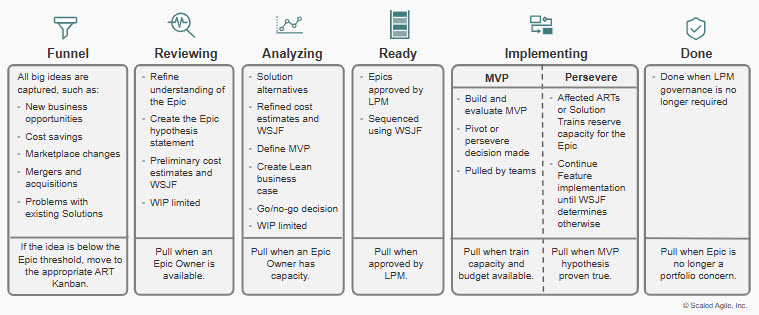
- Design a Lean Portfolio Management (LPM) process to facilitate ERP operational states.
- Funnel: capture intake of all business ideas for a minimum viable product (MVP)
- Review: document and refine all business MVP ideas into Epic categories
- Analyze: determine business Epics and alternative solutions for go/no-go decisions
- Ready: go decisions for business Epics and solutions require business leader approval
- Implementation: build MVP based on stakeholder approval and validate outcomes
- Done: when all PLM/SDLC for agile delivery implementation of an MVP have ended
- Categorize Intake & MVP Requests (e.g. new, change orders, problem managment, etc.) by: technical debt, functional enhancement, MVP integration, compliance or net new MVP
- Prioritize intake & MVP requests based on value, urgency, and resource availability
- Submit ERP enhancement requests through a standardized intake process (e.g. Oracle Service Now, BMC Remedy, Microsoft Azure DevOps, Planisware, etc.)
Transformational Change Benefits
- The benefits of a good ERP system and LPM procedures with concise operational states
- Clarifies ERP operational states and allows for identification of MVP subcategories
- Helps define objectives and key results (OKRs) that translate to MVP features and stories
- Facilitates creation and sustainability of a value management office (VMO)
- Creates raw data for refinement into KPI reports from business intelligence (BI) tools
- Some OKR Examples are:
- Establish real-time inventory visibility (Supply Chain)
- Automate financial and procurement closure (Finance)
- Integrate and track HR onboarding workflows (Human Capital Management)